



In September, the contract activity reached 587 signed contracts, decreasing 15.2% from the previous month and remaining 20.2% below last year’s level, while the median sale price stood at $1.24M, up 11% year over year. Regarding the data currently updated, Manhattan supply stands at 6,112 listings and pending sales total 2,917 units. As a result, based on the real-time ratio between pending sales and supply, the Market Pulse currently stands at 0.48, placing the market in the neutral zone.
Currently, values above 0.5 are considered favorable to the seller, and values below 0.3 are favorable to the buyer.
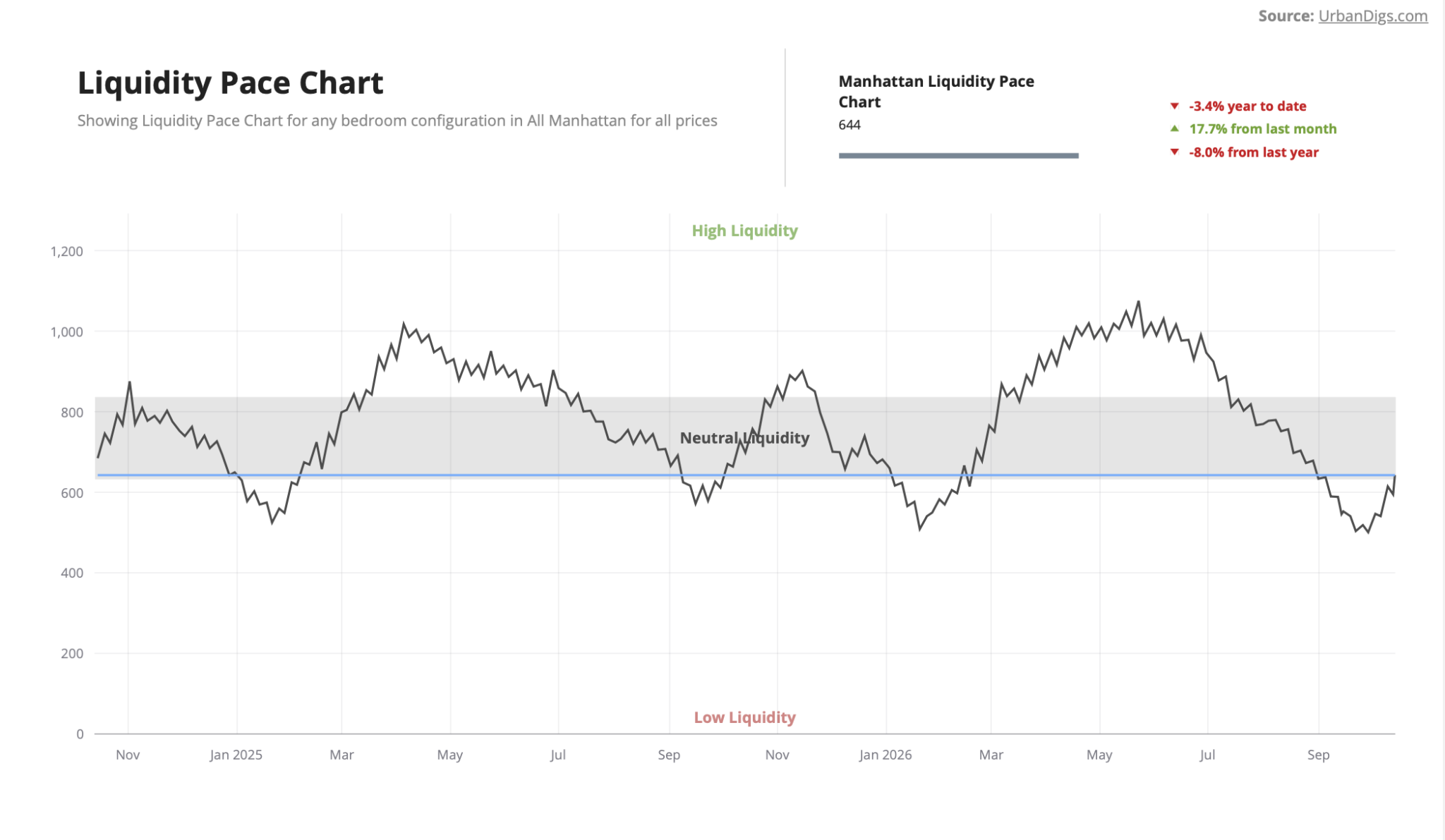
This chart illustrates fluctuations in market activity over time using a 30-day moving window of contract activity. Rising or high levels of contract activity help sellers identify more favorable listing conditions. Declining or low levels of contract activity help buyers identify periods of leverage opportunities, especially in negotiations.
The Liquidity chart is specifically focused on contract activity, whereas the Market Pulse compares supply and demand. Use Liquidity for immediate activity insights and Market Pulse for broader market conditions.
Luxury Segment
During the week ended October 11, 25 contracts were signed in Manhattan at $4 million and above, 5 fewer than the previous week. The total weekly asking-price sales volume reached $177,245,000, with a median asking price of $5,250,000. The average discount from original to last asking price was 4%. The top contract was the Penthouse at 1110 Park Avenue, asking $24.95 million.
Rental Market
In September, the inventory remained extremely tight, with just 5,015 units available for rent, dropping 16% year-over-year to its lowest September level since 2019. Median rent surged 9% year-over-year to a new record high of $5,395. A total of 3,841 leases were signed, down 5% year over year. The vacancy rate stood at 1.54%, remaining stuck near 1.5% for a fifth straight month as persistent inventory constraints continued to push rents higher.
Higher mortgage rates serve as one of the primary catalysts, as elevated borrowing costs keep prospective homebuyers locked in the rental market longer. This prolonged tenancy reduces available housing stock and sustains strong market competition, with 16% of new leases closing above the landlord’s original asking price.
3Q2026 Focus
This persistent upward pressure is heavily fueled by an acute inventory shortage, which is particularly evident in the new development sector where third-quarter contract volume dropped 30% year-over-year as active supply lingers 30% below its 10-year average. With overall supply remaining well below 25-year historical benchmarks, Manhattan property values continue to demonstrate remarkable resilience independently of stock market fluctuations.
(Data source: UrbanDigs, Olshan, Gary Malin, The Real Deal, picture: Luca Bravo)
ShareNOV
2026